



Why Kollective for Teams Is Redefining Collaboration
For years, people have known Kollective as the enterprise video delivery company — the team that solves bandwidth challenges and powers flawless town halls and live video events.
That’s still true.
But it’s nowhere close to the full story.
Today, Kollective has transformed into the performance layer for the entire Microsoft Teams experience — not just live events. And the shift didn’t come from marketing; it came from the realities our customers were facing every day:
• Unexplained drops in video quality
• Inconsistent meeting room performance
• Devices behaving differently across locations
• Organizers unknowingly using the wrong format for large meetings
• Network teams lacking the data to diagnose issues quickly
When we built Collaboration Observability for Teams, we set out to solve these problems at their root — with near-time experience data, network intelligence, and actionable insights.
And now that it’s in the hands of global customers, the results are speaking for themselves.
Below are real use cases, straight from our technical sales engineering team, showing how organizations are using the platform — and the surprising value they’re discovering.
1. When Video Quality Drops, They Finally Know Why
A major European bank uncovered bandwidth exhaustion at specific sites
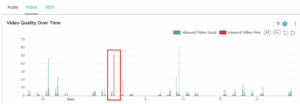
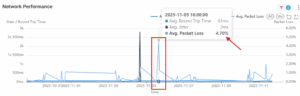
One of Europe’s largest banks saw noticeable drops in Teams video quality at a handful of high-priority locations. The usual monitoring tools couldn’t explain it: no outages, no policy changes, no network alerts.
With Collaboration Observability for Teams, the story became clear within minutes.
The culprit?
Several very large internal meetings where everyone kept their cameras on.
Those additional video streams pushed small sites beyond their network capacity, creating a ripple effect of degraded quality for the entire site.
What the platform surfaced instantly:
• Which meetings triggered the degradation
• How many participants had cameras enabled
• Which offices were impacted
• The correlation between local network load and Teams quality drops
Business impact:
• Network teams now proactively manage camera policies for large meetings
• Leadership can avoid high-risk time windows for all-hands
• The bank can justify bandwidth upgrades with hard data
• And most importantly—Teams quality is predictable again
This is the kind of issue traditional tools never reveal. Collaboration Observability for Teams makes it obvious.


2. Meeting Room Devices Perform Very Differently — and Now They Know Which Ones
A U.S. healthcare organisation is tagging room devices to see manufacturer-level performance differences
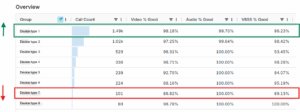
This customer applied Tags in Collaboration Observability for Teams to every meeting-room device across their estate, including the manufacturer, device type, and room profile.
Almost instantly, patterns emerged.
They learned that certain device models consistently showed:
• Higher packet loss
• Slower screen-sharing performance
• Lower video quality
• Intermittent audio quality under load
With this visibility, they can finally answer the questions IT teams have struggled with for years:
• Is the issue the room, the device, the user, or the network?
• Which vendor’s devices offer the most reliable Teams experience?
• What’s the real-world performance difference between models?
Business impact:
• They can now standardise on the highest-performing devices
• Support teams troubleshoot rooms 10x faster
• Procurement now buys based on real performance data, not spec sheets
• Better rooms = fewer support tickets = higher employee satisfaction
This is measurable device reliability insights at scale.

3. Guiding Users to the Right Meeting Format Improves Everything
A global manufacturer drove better performance simply by advising meeting organizers to use the most appropriate technology.
Large meetings weren’t performing well for this customer.
Video quality was inconsistent.
New joiners struggled.
Calls became unstable.
But when Collaboration Observability for Teams surfaced the root cause, it wasn’t the network.
It was user behaviour.
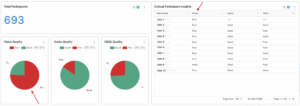
Organizers were setting up standard Teams meetings for sessions with hundreds of participants — sessions that should have been run as Teams Live Events or Town Halls.
The platform showed them:
• Which large meetings were failing
• Who organized them
• When peak strain occurred
• The downstream impacts on quality
Armed with the data, they simply guided their organizers:
"For sessions over X participants, use Town Halls instead of meetings."
The improvement was immediate.
Business impact:
• Higher-quality video delivery
• Less audience strain
• Lower bandwidth consumption
• Fewer failed calls
• Better experience for global participants
Sometimes the value of observability isn’t finding a complicated root cause — it’s uncovering a simple behavioural one.

What These Stories Have in Common
Across industries — banking, healthcare, manufacturing, energy, retail — we’re seeing the same pattern emerge:
Teams performance problems rarely come from one place.
They come from a combination of network conditions, device types, user behaviour, room setup, codec handling, bandwidth availability, and more.
Collaboration Observability for Teams is giving enterprises visibility they’ve never had before.
Not generic dashboards.
Not canned metrics.
Not high-level trends.
Actual experience data. Actual root causes. Actual remediation paths.
With Kollective, enterprises can now:
• Correlate network performance with quality drops
• Benchmark devices, vendors, and rooms
• Detect misconfigured meeting formats
• Identify VIP experience issues
• Track global collaboration health
• Justify network upgrades with evidence
• Reduce MTTR across IT support
• Improve employee digital experience at scale
All from one platform.
We’re Still the Best at Enterprise Video — But We’re Now So Much More
Kollective didn’t stop solving live video delivery.
We took 20+ years of network experience and built a platform that shows IT teams something they’ve been missing:
The ability to see, understand, and improve the full end-to-end Teams experience — meetings, rooms, devices, networks, and people.
Not just live events.
Not just bandwidth relief.
Not just caching.
The entire collaboration ecosystem.
If your organisation is experiencing the same challenges — video drops, device inconsistency, meeting chaos, room issues, unclear root causes — this is the moment to rethink what’s possible.
If Teams performance is a priority for your organisation…
…or if you simply want to know what’s really happening inside your collaboration environment:
Let’s talk.
Kollective shows you why things go wrong so you can fix them before people even notice.